
Consumers navigate a saturated beauty market, making informed purchasing decisions increasingly difficult. A useful beauty product review moves beyond simple endorsement or dismissal, serving as a critical bridge between product claims and real-world experience. For brands, well-crafted reviews build trust and drive conversions; for reviewers, they establish authority and relevance. This guide outlines how to structure, write, and present beauty product reviews that provide tangible value, helping consumers make confident choices and establishing your content as a reliable resource.
Understanding Your Audience and Their Needs
Effective reviews begin with a clear understanding of who you are writing for and what specific problems they are trying to solve. Generic praise rarely helps a consumer decide between two similar serums or foundations.
Identifying Key Demographics and Concerns
Different segments of the beauty market prioritize distinct attributes. A teenager researching acne treatments has different priorities than a mature consumer seeking anti-aging solutions. Consider:
- Skin Type: Oily, dry, combination, sensitive, acne-prone. How did the product perform on your specific skin type, and what might that mean for others?
- Hair Type: Fine, thick, curly, straight, color-treated, oily scalp, dry scalp. Detail the product's impact on these variables.
- Age Group: Products formulated for specific age-related concerns (e.g., anti-aging, blemish control).
- Lifestyle: Is the product travel-friendly, suitable for quick application, or designed for a multi-step routine?
Tailoring your review to these segments ensures the information directly addresses relevant concerns, making it immediately useful for a targeted audience.
Pre-Purchase Questions to Address
Before committing to a purchase, consumers typically seek answers to practical questions that influence their decision. A useful review preempts these by covering:
- Texture and Scent: Is it thick, runny, sticky, fast-absorbing? Is the scent strong, subtle, artificial, or natural?
- Application Experience: How easy is it to apply? Does it pill, streak, or absorb quickly?
- Efficacy for Claims: Does the product deliver on its promises (e.g., "24-hour hydration," "reduces fine lines," "volumizes hair")? Provide specific observations.
- Ingredient Transparency: Highlight key active ingredients and their potential benefits or common allergens, without making medical claims.
- Value for Money: Is the price justified by the quantity, performance, or unique benefits compared to alternatives?
Structuring Your Review for Maximum Impact
A well-structured review guides the reader through your experience logically, ensuring they can quickly find the information most relevant to them.
The Essential Elements of a Comprehensive Review
Organize your review with clear sections, allowing readers to skim or deep-dive as needed:
Product Identification: Clearly state the full product name, brand, and category (e.g., "Brand X Hydrating Serum," "Brand Y Volumizing Mascara").
Manufacturer Claims: Briefly list what the brand promises the product will do. This sets the stage for comparing claims against reality.
Key Ingredients (Optional but Recommended): Mention 2-3 standout ingredients and their general purpose, especially if they are active or commonly sought after (e.g., "contains hyaluronic acid for hydration," "features salicylic acid for exfoliation").
Application & Sensory Experience: Describe the product's look, feel, and smell upon application. How does it spread? How long does it take to absorb? Does it leave a residue?
Performance & Results: This is the core. Detail your experience over the testing period. Be specific: "After two weeks of nightly use, my skin felt noticeably smoother and less prone to midday oiliness," or "The mascara provided volume without clumping for approximately 6 hours before minor flaking began."
Pros & Cons: A bulleted list offers a quick summary of the product's strengths and weaknesses.
Value Proposition: Discuss the price point relative to quantity, performance, and comparable products on the market. Is it a splurge, a good deal, or overpriced?
Recommendation: Conclude with a clear statement on who the product is best suited for, and perhaps who should avoid it. Consider skin types, concerns, and desired outcomes.
Visuals and Demonstrations
High-quality visuals significantly enhance a beauty product review's utility. Include:
- Product Photography: Clear, well-lit images of the product packaging and the product itself (e.g., texture shot on the back of the hand).
- Before & After Photos: For skincare, makeup, or hair products, these provide undeniable proof of efficacy. Ensure consistent lighting and angles.
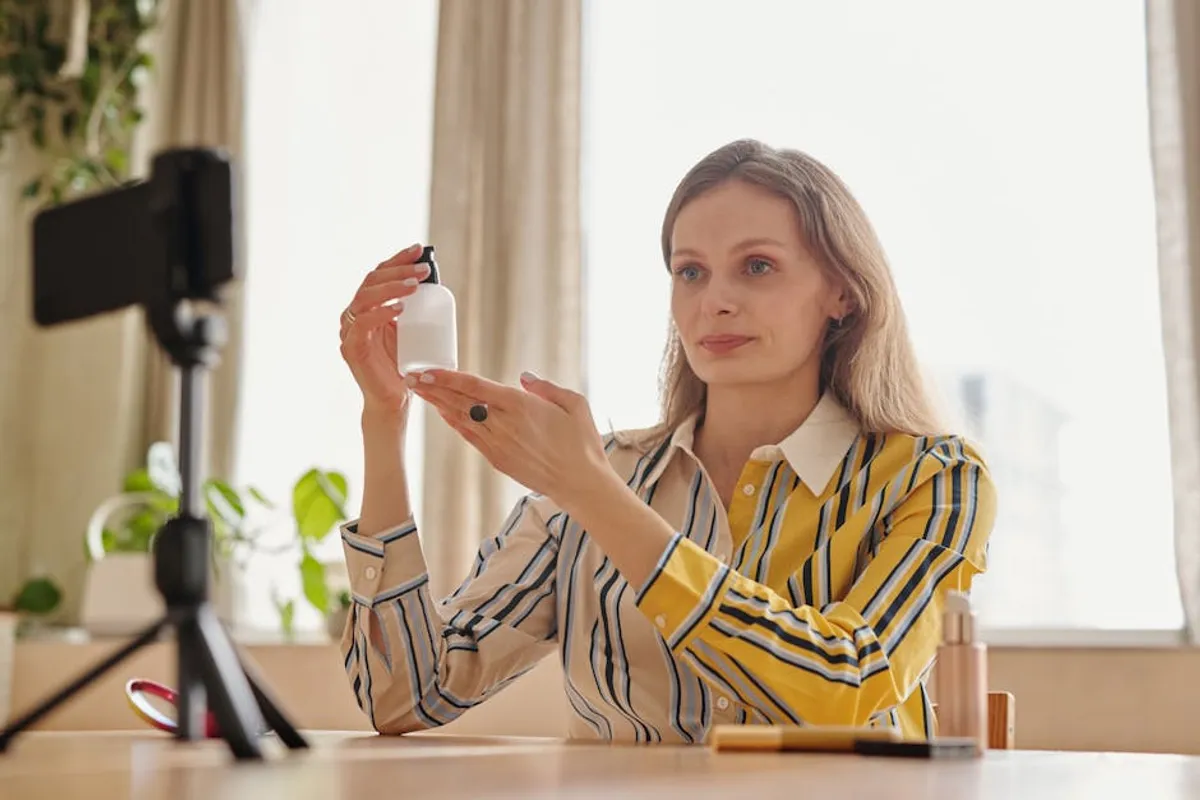
- Application Videos: Short clips demonstrating how to use the product, showcasing its texture, or illustrating its immediate effect (e.g., foundation coverage, mascara application).
Visuals offer concrete evidence that words alone cannot convey, building trust and demonstrating transparency.
Crafting Credible and Specific Content
The distinction between a useful review and a subjective opinion lies in specific, descriptive language and quantifiable observations.
Beyond "Good" and "Bad": Using Descriptive Language
Replace vague adjectives with sensory details and precise observations. Instead of "it felt good," write: "The serum had a lightweight, almost watery consistency that absorbed within 15 seconds, leaving no tacky residue." For scent: "The fragrance was a subtle, natural rose, dissipating within minutes of application." This level of detail allows readers to mentally experience the product.
Quantifying Results Where Possible
While beauty results are often subjective, look for opportunities to quantify your experience. For example:
- "My foundation wear time extended from 6 hours to 10 hours without significant creasing when using this primer."
- "The redness around my nose, typically a 7/10 on a visual scale, reduced to a 4/10 after three weeks of consistent use."
- "The shampoo reduced hair fall by approximately 20% during brushing."
This adds an objective layer to your review, making it more persuasive.
Addressing Specific Skin/Hair Concerns
Frame your observations within the context of common beauty concerns. For example, when reviewing a moisturizer, discuss its performance for "dry, flaky patches," "T-zone oiliness," or "sensitivity around the eyes." This directly speaks to readers with similar issues.
Pro Tip: Test beauty products consistently for a minimum of 2-4 weeks, or even longer for skincare (6-8 weeks for anti-aging), before forming a definitive opinion. Immediate results are often superficial; true efficacy emerges with sustained use. Avoid making strong claims after only a few applications.
Ethical Considerations and Transparency
Credibility is paramount. Ethical practices build long-term trust with your audience.
Disclosure of Affiliations and Samples
Always clearly state if a product was gifted, received as a press sample, or if you have an affiliate relationship that generates commission from purchases. This ensures transparency and maintains reader trust. A simple disclaimer at the beginning or end of the review is sufficient (e.g., "This product was gifted by [Brand Name], but all opinions are my own.").
Maintaining Objectivity
Separate your personal preferences from the product's objective performance. While you might dislike a strong fragrance, acknowledge that others might find it appealing. Focus on factual observations about texture, wear, and efficacy, rather than purely subjective like/dislike statements.
Avoiding Medical Claims
Beauty products are cosmetics, not pharmaceuticals. Do not claim that a product can "cure" acne, "treat" eczema, or "reverse" aging. Stick to cosmetic benefits like "reduces the appearance of blemishes," "soothes dry skin," or "minimizes the look of fine lines." Misleading medical claims can harm your credibility and potentially mislead consumers about product capabilities.
Practical Wrap-up: Elevating Your Review Authority
To establish your reviews as a go-to resource, consistently apply these principles. Focus on providing tangible, actionable insights rather than just sharing an opinion. High-quality visuals, detailed sensory descriptions, and transparent disclosures are not just best practices; they are foundational elements for building a reputation as a trusted authority in beauty product assessments. By prioritizing clarity, specificity, and ethical conduct, your reviews will serve as invaluable tools for consumers navigating complex purchasing decisions.
Frequently Asked Questions
How long should I test a beauty product before reviewing it?
For most skincare products, a minimum of 2-4 weeks is recommended to observe initial effects, with 6-8 weeks ideal for anti-aging or corrective treatments. Makeup and hair products can often be reviewed after 1-2 weeks of consistent use, depending on the product type and claims.
Should I include ingredients in my review?
Yes, including a brief mention of 2-3 key active ingredients or notable components (e.g., "fragrance-free," "non-comedogenic") adds value. Explain their general purpose without delving into complex chemistry, focusing on how they relate to the product's claims or benefits.
How do I handle negative experiences or products I dislike?
Maintain objectivity. Instead of simply stating "I hated it," explain precisely why it didn't work for you. For example, "The foundation oxidized heavily on my oily skin within two hours, turning noticeably orange," or "The shampoo left my fine hair feeling stripped and brittle." This still provides useful information for readers with similar concerns.
What makes a beauty review "useful"?
A useful beauty review provides specific, actionable information that helps a consumer decide if a product is right for them. It goes beyond subjective opinion to detail sensory experiences, application methods, observed results, and value, often supported by visuals and clear recommendations for specific skin/hair types or concerns.



