
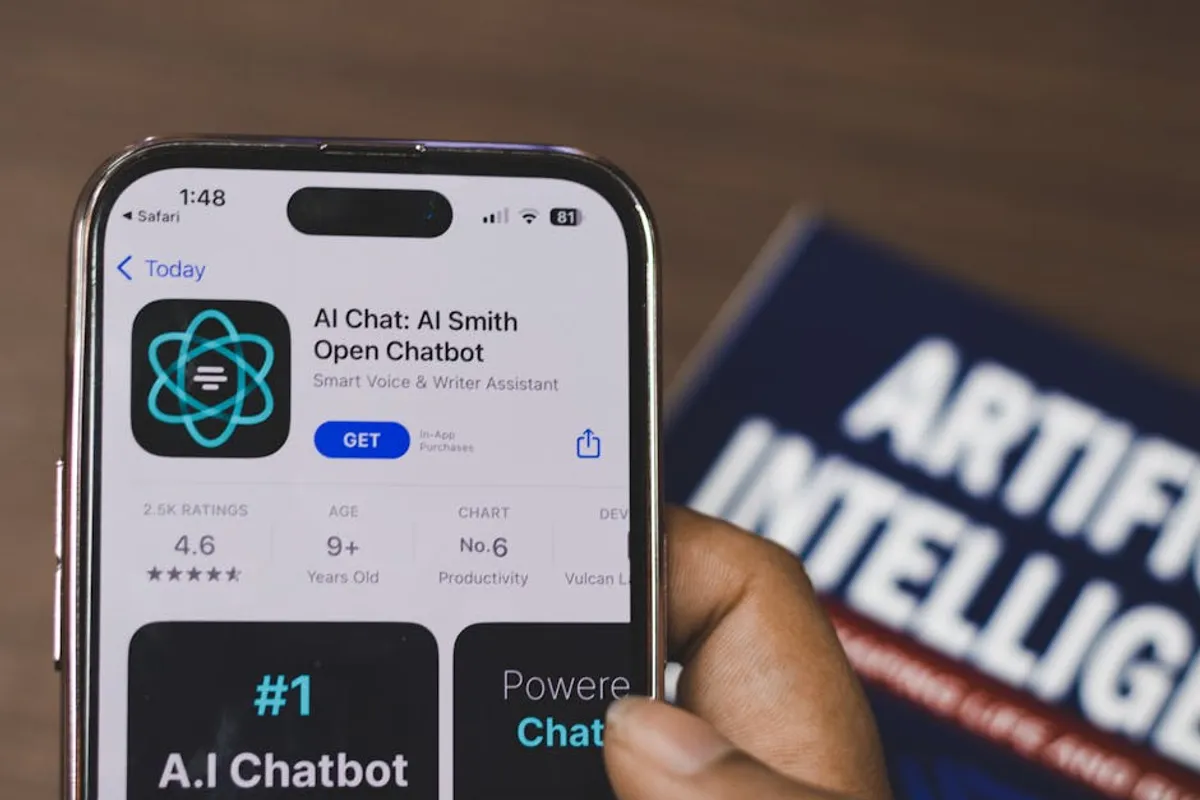
The landscape of customer interaction is evolving rapidly, driven by advancements in artificial intelligence. For businesses in 2026, selecting the right AI chatbot app is no longer about simple automation; it's about integrating sophisticated conversational agents that understand complex intent, personalize interactions, and contribute directly to revenue and operational efficiency. The decision hinges on factors like multimodal capabilities, predictive analytics, ethical AI frameworks, and seamless integration with existing enterprise systems. A strategic choice can transform customer service from a cost center into a competitive differentiator, providing instant, always-on support that enhances user experience and streamlines internal workflows.
What to Look For in 2026 AI Chatbot Apps
As AI technology matures, the criteria for evaluating chatbot applications have become more stringent and specialized. In 2026, businesses should prioritize solutions that offer more than basic Q&A functionality. Look for advanced Natural Language Understanding (NLU) capable of discerning nuanced intent, sentiment, and even emotional cues from user input. Multimodal capabilities, allowing interaction via text, voice, and visual elements, are becoming standard for comprehensive customer engagement. Data privacy and ethical AI considerations are paramount, requiring transparent data handling and bias mitigation strategies. Scalability, robust integration frameworks for CRM, ERP, and marketing automation platforms, and the ability to operate across diverse channels (web, mobile, social, IoT) are also critical. Finally, evaluate the platform's analytical capabilities, focusing on actionable insights into user behavior, conversation flows, and performance metrics that drive continuous improvement and demonstrate clear ROI.
1. CognitoFlow AI
CognitoFlow AI specializes in deep learning-driven conversational interfaces designed for complex, multi-turn interactions. Its core strength lies in its adaptive learning models, which continuously refine understanding based on user feedback and operational data. The platform excels at handling nuanced inquiries and guiding users through intricate processes, making it suitable for sectors requiring high-precision information retrieval and task completion. CognitoFlow emphasizes explainable AI, providing insights into its decision-making processes for compliance and trust.
Best for: Enterprise-level customer support and internal knowledge management requiring high accuracy and auditability in regulated industries.
- Pros: Superior NLU for complex queries; real-time adaptive learning; strong explainable AI features; robust security protocols.
- Cons: Higher implementation cost due to advanced customization; requires significant data for optimal training.
- Verdict: A top-tier choice for organizations prioritizing precision, transparency, and the ability to manage highly complex conversational flows.
2. SynapseBot
SynapseBot offers a multimodal AI chatbot experience, seamlessly blending text, voice, and visual interaction within a single interface. Its unique selling proposition is its ability to interpret and respond to mixed inputs, such as a user typing a question while simultaneously uploading an image or speaking a command. This makes it particularly effective for product support, troubleshooting, and interactive sales processes where visual context or voice commands enhance user experience. SynapseBot integrates advanced computer vision and speech-to-text technologies.
Best for: E-commerce, technical support, and interactive service industries where diverse input types enhance problem resolution and engagement.
- Pros: Excellent multimodal input processing; intuitive visual interaction design; broad platform compatibility; high user satisfaction rates.
- Cons: Customization of visual elements can be resource-intensive; requires robust bandwidth for optimal performance.
- Verdict: An innovative solution for businesses aiming to provide a rich, versatile, and highly engaging conversational experience across channels.
3. AuraConnect
AuraConnect focuses on proactive customer engagement, using predictive analytics to anticipate user needs and initiate conversations before explicit queries are made. It analyzes browsing behavior, purchase history, and demographic data to offer personalized recommendations, support, or relevant information. This predictive capability significantly reduces customer effort and improves conversion rates for sales-oriented applications. AuraConnect integrates deeply with CRM and marketing automation platforms to leverage existing customer profiles.
Best for: Sales, marketing, and customer retention strategies where proactive outreach and personalized engagement drive business outcomes.
- Pros: Strong predictive AI for proactive engagement; deep integration with major CRM/marketing platforms; measurable impact on conversion.
- Cons: Requires extensive data access for effective prediction; potential for privacy concerns if not managed transparently.
- Verdict: Ideal for organizations seeking to transform passive support into an active, revenue-generating engagement channel.
4. LexiGenius
LexiGenius distinguishes itself with its advanced Natural Language Generation (NLG) capabilities, producing highly coherent, contextually relevant, and human-like responses. Unlike chatbots that rely on canned responses or simple templates, LexiGenius dynamically generates unique answers, summaries, and even creative content based on the conversation's flow and user intent. This leads to more natural and satisfying interactions, particularly in content-heavy or advisory roles. It's built on state-of-the-art transformer models.
Best for: Content generation, educational platforms, creative industries, and customer service requiring nuanced, articulate communication.
- Pros: Exceptionally human-like and dynamic response generation; high conversational fluency; versatile for various content tasks.
- Cons: Resource-intensive processing for complex NLG; potential for "hallucinations" if not properly constrained and monitored.
- Verdict: A powerful tool for businesses where the quality and naturalness of conversational output are paramount to brand perception.
5. OmniResponse
OmniResponse is designed for ultimate scalability and cross-platform deployment, offering a unified AI conversational agent across web, mobile apps, social media, and IoT devices. Its strength lies in maintaining consistent brand voice and knowledge base across all touchpoints, ensuring a seamless customer journey regardless of the channel chosen. The platform provides a centralized management dashboard for knowledge base updates and performance monitoring across its distributed deployments.
Best for: Large enterprises with a diverse digital presence and a need for consistent, scalable customer support across all channels.
- Pros: Unmatched cross-platform consistency; highly scalable architecture; centralized management for distributed deployments.
- Cons: Initial setup complexity for extensive channel integration; potential for feature disparity across less common channels.
- Verdict: The go-to solution for organizations requiring a truly omnichannel AI chatbot strategy with unified brand messaging.
6. SentientServe
SentientServe integrates emotional intelligence (EI) into its conversational AI, allowing it to detect and respond to user sentiment and emotional states. By analyzing linguistic cues, tone (in voice interactions), and even facial expressions (in video contexts), it can adapt its communication style, escalate appropriately, or offer empathetic responses. This capability significantly improves customer satisfaction, particularly in sensitive support scenarios. It employs advanced affective computing algorithms.
Best for: Customer service, mental health support, and industries where empathetic interaction and de-escalation are critical for positive outcomes.
- Pros: Advanced emotional intelligence detection; adaptive conversational style; significantly improves customer empathy.
- Cons: Ethical considerations around emotional data; requires careful training to avoid misinterpretation of sentiment.
- Verdict: A pioneering solution for brands committed to delivering highly empathetic and emotionally intelligent customer experiences.
7. Verbalytics AI
Verbalytics AI specializes in automating voice-based interactions, offering advanced speech recognition and voice synthesis that mimic human conversation. It excels in virtual assistant roles, call center automation, and interactive voice response (IVR) systems. The platform focuses on reducing latency and improving naturalness in spoken dialogue, making it indistinguishable from human agents for many routine tasks. It supports a wide array of languages and accents, crucial for global operations.
Best for: Call centers, voice-activated devices, and businesses looking to automate spoken customer interactions with high fidelity.
- Pros: Superior speech recognition and synthesis; low latency in voice interactions; extensive language and accent support.
- Cons: Integration with legacy IVR systems can be challenging; voice-only interactions limit multimodal context.
- Verdict: The definitive choice for organizations aiming to deliver highly efficient and natural voice-first customer experiences.
8. EchoMind
EchoMind provides a unique "memory-augmented" AI chatbot, capable of retaining and referencing information from past interactions over extended periods. This allows for highly personalized and continuous conversations, where the chatbot remembers user preferences, previous issues, and historical context without needing explicit re-statement. This long-term memory feature is crucial for building rapport and reducing repetitive information exchange, enhancing the overall customer journey.
Best for: Personalized customer relationship management, concierge services, and complex sales cycles requiring ongoing context.
- Pros: Persistent memory for continuous context; builds stronger customer rapport; reduces conversational friction.
- Cons: Requires robust data storage and retrieval infrastructure; careful management of privacy compliance for stored data.
- Verdict: An excellent option for businesses focused on deep, long-term customer relationships and highly personalized service.
9. ProactivePal
ProactivePal specializes in event-driven engagement, monitoring specific triggers or user behaviors to initiate timely, relevant chatbot interactions. This could include abandoned carts, unusual login activity, or reaching specific milestones in a user journey. The chatbot intervenes with targeted assistance, offers, or alerts, significantly reducing churn and improving user retention. It integrates with real-time analytics platforms to detect these triggers instantly.
Best for: E-commerce, SaaS platforms, and digital services focused on reducing churn, improving onboarding, and driving specific user actions.
- Pros: Highly effective for reducing churn and increasing conversions; real-time trigger detection; customizable intervention logic.
- Cons: Requires careful configuration to avoid intrusive interactions; depends on robust event tracking infrastructure.
- Verdict: A powerful tool for businesses that want to actively guide users through their journey and prevent negative outcomes.
10. InsightBot Pro
InsightBot Pro is an analytical powerhouse, not only responding to queries but also generating detailed reports and insights from conversational data. It identifies common pain points, emerging trends, and areas for product or service improvement based on aggregated user interactions. This platform acts as a continuous feedback loop, providing actionable intelligence to product development, marketing, and customer service teams. It uses advanced topic modeling and sentiment analysis.
Best for: Product management, market research, and customer experience teams seeking to derive strategic insights from conversational data.
- Pros: Robust analytical capabilities; generates actionable business insights; continuous feedback loop for product improvement.
- Cons: Focus on analytics means less emphasis on advanced conversational nuance; requires data science literacy to fully leverage.
- Verdict: Essential for data-driven organizations that want to transform customer conversations into strategic business intelligence.
11. QuantumQuery
QuantumQuery leverages quantum-inspired algorithms for ultra-fast and highly accurate information retrieval from vast, unstructured datasets. This enables it to answer highly specific and esoteric questions instantly, even from obscure knowledge bases, making it ideal for research, legal, or highly technical support environments. Its speed and precision in knowledge base navigation are unparalleled, providing definitive answers where other bots might struggle with ambiguity.
Best for: Research institutions, legal firms, technical support for complex products, and organizations with extensive, intricate knowledge bases.
- Pros: Exceptional speed and accuracy in information retrieval; handles highly complex and technical queries; robust for specialized domains.
- Cons: Niche application focus; higher computational requirements and potential cost due to advanced algorithms.
- Verdict: The premier choice for industries where instantaneous, precise access to deep technical or specialized knowledge is non-negotiable.
12. HyperDialogue
HyperDialogue specializes in hyper-personalized, dynamic conversation paths that adapt in real-time based on every user input, not just predefined flows. It uses reinforcement learning to optimize conversation strategies for specific outcomes, such as conversion or problem resolution. This results in highly efficient and tailored interactions that feel uniquely crafted for each individual user, maximizing engagement and effectiveness. It learns from successful and unsuccessful conversation branches.
Best for: Sales, complex product configuration, and high-value customer service where dynamic, optimized conversation paths are critical.
- Pros: Highly adaptive and personalized conversation paths; real-time optimization for specific outcomes; maximizes user engagement.
- Cons: Requires extensive training data for optimal performance; potential for complex configuration and monitoring.
- Verdict: A cutting-edge solution for businesses demanding the most adaptive and outcome-driven conversational AI experiences available.
Measuring Chatbot Success and Choosing Your Provider
Selecting an AI chatbot app is a strategic investment, and its success must be measured against clear business objectives. Key performance indicators (KPIs) extend beyond simple conversation counts. Focus on metrics like resolution rate (percentage of issues resolved without human intervention), average handling time reduction, customer satisfaction scores (CSAT) derived from post-chat surveys, and conversion rates for sales-oriented bots. For internal applications, measure efficiency gains, such as time saved for employees accessing information. Cost savings from reduced human agent workload are also critical. When choosing a provider, evaluate their commitment to data privacy and security, their roadmap for future AI advancements, and the flexibility of their integration APIs. A proof-of-concept trial with specific, measurable goals is often the most effective way to validate a solution's fit before full-scale deployment. Prioritize vendors offering robust analytics dashboards and continuous support for model refinement.
Frequently Asked Questions About AI Chatbot Apps in 2026
What are the main ethical considerations for AI chatbots in 2026?
Ethical considerations in 2026 revolve around data privacy, bias in AI responses, transparency regarding AI interaction (disclosing it's a bot), and the potential for deepfakes in multimodal communications. Companies must prioritize fair AI practices and clear user consent.
How do multimodal AI chatbots enhance user experience?
Multimodal chatbots improve user experience by allowing natural interaction through text, voice, and visuals. This caters to diverse preferences, provides richer context for complex queries (e.g., uploading an image of a product defect), and makes interactions more intuitive and efficient.
Can AI chatbots truly understand complex human emotions in 2026?
While AI chatbots in 2026 have advanced emotional intelligence capabilities, allowing them to detect and respond to sentiment, true 'understanding' in the human sense remains a complex area. They interpret emotional cues and adapt responses, but their empathy is algorithmic, not sentient.
What role do AI chatbots play in data analytics and business intelligence?
AI chatbots are increasingly vital for data analytics. They collect vast amounts of conversational data, which, when analyzed, reveal customer pain points, emerging trends, product feedback, and service gaps. This intelligence informs product development, marketing strategies, and operational improvements.
How important is integration with existing enterprise systems for a chatbot?
Integration is critical. A chatbot's value multiplies when it can seamlessly access and update information in CRM, ERP, and marketing automation platforms. This enables personalized interactions, real-time data synchronization, and a unified customer view, preventing data silos and enhancing operational efficiency.



