
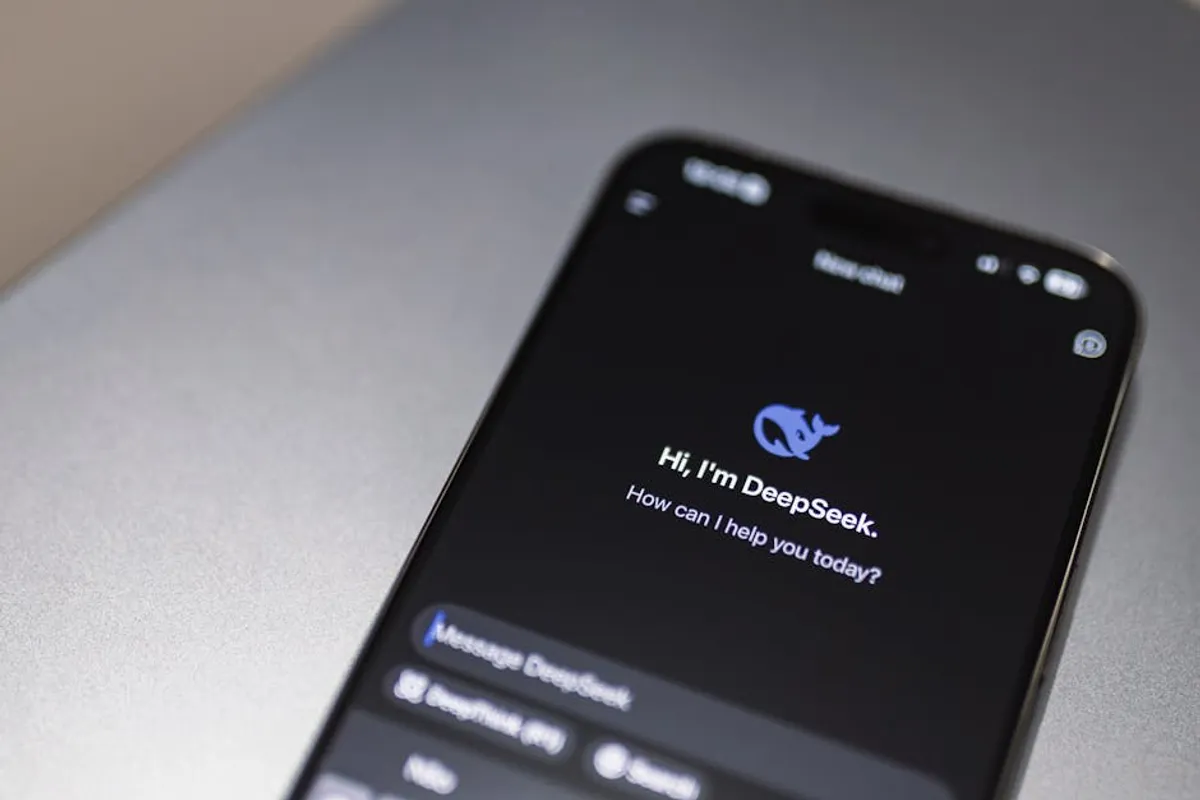
The proliferation of advanced conversational AI models has opened new avenues for both engaging leisure and streamlined workflow management. Beyond simple Q&A interfaces, AI chatbots are evolving into sophisticated digital companions capable of delivering personalized experiences and automating complex tasks. This exploration delves into specific, actionable concepts for AI chatbots designed to either enrich personal time or enhance professional output. The focus is on identifying core functionalities and potential impacts, providing a framework for understanding where these intelligent agents can deliver tangible value. For developers, entrepreneurs, or organizations considering AI integration, distinguishing between novel applications and practical solutions is paramount. This guide outlines distinct chatbot ideas, detailing their unique proposition, operational advantages, inherent challenges, and overall strategic fit within the burgeoning AI landscape.
Key Considerations for AI Chatbot Development
Developing an effective AI chatbot, whether for entertainment or productivity, requires careful consideration of several foundational elements beyond just the core AI model. User experience is paramount; the chatbot must process natural language accurately, respond contextually, and maintain a consistent persona. Data privacy and security protocols are non-negotiable, especially when handling personal information or sensitive business data. Scalability must be baked into the architecture from the outset to accommodate growing user bases and increasing interaction volumes without performance degradation. Furthermore, evaluating integration capabilities with existing platforms, APIs, and data sources determines how seamlessly the chatbot can fit into a user's digital ecosystem. Technical complexity, encompassing everything from advanced natural language understanding (NLU) to sophisticated response generation, dictates development timelines and resource allocation. Finally, ethical considerations, including bias mitigation in responses and transparent handling of user data, are critical for building trust and ensuring responsible deployment. Addressing these aspects upfront establishes a solid foundation for a successful and impactful AI chatbot.
1. Interactive Storyteller AI
This chatbot concept allows users to co-create narratives, branching adventures, or personalized bedtime stories through conversational prompts. It leverages generative AI to adapt plotlines, character interactions, and environmental details based on user choices, ensuring a unique experience with each session. The system maintains narrative coherence and character consistency while dynamically responding to unexpected inputs, moving beyond static choose-your-own-adventure formats. Its core strength lies in fostering creativity and delivering engaging, on-demand escapism.
Best For: Individual entertainment, educational platforms for creative writing, children’s interactive content, or long-form narrative gaming.
Pros:
- High engagement potential due to personalization and user agency.
- Scalable content generation without requiring pre-scripted paths.
- Can be adapted for various genres and age groups.
- Encourages imaginative thinking and reading comprehension.
Cons:
- Maintaining consistent narrative quality and logical progression can be technically challenging.
- Risk of generating nonsensical or repetitive content without robust guardrails.
- Requires significant processing power for real-time generative responses.
- User expectations for sophisticated storytelling may be difficult to consistently meet.
Verdict: This idea offers substantial entertainment value, particularly for niche audiences seeking highly personalized narrative experiences. Its success hinges on advanced AI capabilities to manage plot complexity and character depth effectively.
2. Virtual Game Master AI
Designed to host and facilitate text-based role-playing games (RPGs), this AI chatbot acts as a digital dungeon master. It manages game mechanics, generates encounters, describes environments, and controls non-player characters (NPCs) based on user input and predetermined game rules. The bot tracks character stats, inventory, and plot progression, adapting scenarios dynamically to player choices. It provides a low-barrier entry point for individuals or small groups to engage in complex narrative gaming without needing a human game master.
Best For: Solo RPG enthusiasts, small online gaming communities, educational settings for collaborative storytelling, or as a creative writing prompt generator.
Pros:
- Provides on-demand gaming experiences without scheduling conflicts.
- Offers infinite replayability through procedural content generation.
- Can introduce new players to RPG mechanics in a guided environment.
- Reduces the need for a human facilitator, making complex games more accessible.
Cons:
- Balancing challenge and fairness in dynamic scenarios is difficult.
- AI might struggle with nuanced social interactions or truly creative player solutions.
- Requires a robust understanding of game rules and lore to prevent inconsistencies.
- User experience can be hampered by slow response times or repetitive descriptions.
Verdict: A promising concept for democratizing RPGs, its viability depends on the AI's ability to create engaging, coherent, and challenging game worlds that adapt intelligently to player agency.
3. Creative Brainstormer AI
This chatbot functions as a collaborative partner for creative professionals, assisting with idea generation across various domains such as writing, design, music composition, or marketing. Users can prompt it with a concept, a problem, or a creative block, and the AI will offer diverse suggestions, alternative perspectives, and unexpected connections. It can generate plot twists, character profiles, color palettes, chord progressions, advertising slogans, or even technical solutions by synthesizing vast amounts of creative data and applying lateral thinking algorithms.
Best For: Writers, graphic designers, musicians, marketers, product developers, or anyone needing a creative spark or a fresh perspective on a problem.
Pros:
- Overcomes creative blocks by offering novel and diverse ideas.
- Accelerates the initial ideation phase of projects.
- Can synthesize information from disparate fields to inspire unique solutions.
- Provides an objective, non-judgmental brainstorming partner.
Cons:
- Generated ideas may sometimes be generic, impractical, or unoriginal without specific prompting.
- Requires users to refine and filter suggestions, as the AI lacks inherent judgment of quality.
- Risk of over-reliance leading to a reduction in human creative effort.
- Understanding highly abstract or nuanced creative prompts can be challenging.
Verdict: A valuable tool for augmenting human creativity, this chatbot's utility is maximized when used as an ideation accelerator rather than a sole creative engine. Its commercial appeal lies in enhancing productivity for creative industries.
4. Personalized Trivia Host AI
This chatbot serves as an interactive host for personalized trivia games, adapting question difficulty, topics, and formats based on the user's knowledge level and stated interests. It can track user performance over time, identify areas for improvement, and even introduce new learning material disguised as trivia challenges. The bot provides immediate feedback, explanations for correct answers, and maintains a competitive yet friendly tone. It moves beyond static quiz apps by offering a dynamic, conversational experience.
Best For: Individual learning and entertainment, casual group gatherings, educational institutions for engaging review sessions, or corporate training for knowledge retention.
Pros:
- Highly engaging due to personalized content and adaptive difficulty.
- Offers a fun way to learn and reinforce knowledge across various subjects.
- Provides immediate feedback and explanations, enhancing learning.
- Can be integrated with leaderboards and social features for competitive play.
Cons:
- Maintaining a vast, accurate, and up-to-date question database is resource-intensive.
- AI might struggle with ambiguity in user answers or complex, subjective topics.
- Risk of repetitive questions if the topic pool is too narrow.
- Requires robust natural language understanding to interpret nuanced responses.
Verdict: This concept holds strong appeal for both entertainment and informal education, delivering a customized and interactive learning experience that traditional trivia formats cannot match.
5. Language Practice Partner AI
Operating as a conversational tutor, this AI chatbot facilitates language learning by engaging users in dialogue, correcting grammar and pronunciation (via text input), expanding vocabulary, and explaining cultural nuances. It can simulate real-life conversations, offer role-playing scenarios, and provide immediate, context-aware feedback. The bot adapts to the user's proficiency level, gradually introducing more complex sentence structures and vocabulary, making practice accessible anytime, anywhere.
Best For: Language learners of all levels, individuals preparing for travel or international work, or educational platforms seeking to supplement traditional language instruction.
Pros:
- Provides unlimited, non-judgmental practice opportunities.
- Offers instant feedback on grammar, syntax, and vocabulary usage.
- Can simulate diverse conversational contexts and scenarios.
- Accessible 24/7, overcoming scheduling and geographical barriers.
Cons:
- Lacks the nuanced human interaction necessary for advanced conversational fluency.
- Cannot correct pronunciation in real-time speech without advanced voice AI integration.
- May struggle with idiomatic expressions or highly subjective cultural explanations.
- Reliance on text input can limit practice of spontaneous verbal responses.
Verdict: An excellent supplementary tool for language acquisition, this chatbot significantly enhances practice opportunities but should be viewed as a complement, not a replacement, for human interaction and immersive learning.
6. Historical Figure Conversationalist AI
This chatbot allows users to engage in simulated conversations with historical figures, fictional characters, or even custom-built personas. The AI is trained on extensive datasets related to the chosen character's known writings, speeches, historical context, and biographical information to emulate their knowledge, perspective, and speech patterns. Users can inquire about their life, beliefs, experiences, or seek advice from their unique viewpoint, offering an immersive educational and entertainment experience.
Best For: History enthusiasts, students, creative writers seeking character insights, or educational platforms for interactive learning about historical periods and figures.
Pros:
- Provides an engaging and novel way to learn about history and complex ideas.
- Offers unique perspectives on contemporary issues through a historical lens.
- Can make abstract historical figures feel more relatable and accessible.
- Stimulates critical thinking and research interest.
Cons:
- Accuracy of historical representation can be challenging to maintain and verify.
- Risk of misinterpreting historical context or generating anachronistic responses.
- Requires massive, curated datasets for each character to be convincing.
- User expectations for deep, nuanced conversation may not always be met.
Verdict: This chatbot offers a high-engagement educational and entertainment experience, provided the AI's persona generation and historical accuracy are meticulously developed and maintained. Its value is in making history interactive and personal.
7. Intelligent Meeting Assistant AI
This productivity-focused chatbot integrates with virtual meeting platforms to transcribe discussions in real-time, generate concise summaries, and identify key decisions, action items, and assigned owners. It can highlight critical topics, track sentiment during the meeting, and even suggest follow-up questions or resources. Post-meeting, it automatically distributes structured notes, ensuring all participants are aligned and accountable. This automates a significant administrative burden, allowing participants to focus solely on the discussion.
Best For: Businesses of all sizes, project teams, remote work environments, educational institutions for lecture summaries, or anyone frequently participating in virtual meetings.
Pros:
- Significantly reduces time spent on note-taking and summary creation.
- Ensures comprehensive capture of meeting details and action items.
- Improves accountability and follow-through on decisions.
- Frees up human participants to engage more fully in discussions.
Cons:
- Accuracy of transcription can be affected by audio quality, accents, or multiple speakers.
- Summaries may miss subtle nuances or context without human oversight.
- Raises privacy concerns regarding meeting content and participant data.
- Integration with diverse meeting platforms can be technically complex.
Verdict: A highly valuable productivity tool for modern workplaces, this chatbot streamlines meeting management and enhances operational efficiency, provided its accuracy and data security are robust.
8. Knowledge Synthesis Bot AI
This chatbot acts as a sophisticated research assistant, capable of ingesting large volumes of unstructured data (articles, reports, web pages, internal documents) on a given topic and synthesizing the information into coherent, concise summaries. Users can ask complex questions, and the bot will provide answers backed by cited sources, identify key themes, and highlight conflicting information. It moves beyond simple search engines by performing deep contextual analysis and generating structured insights.
Best For: Researchers, analysts, consultants, students, journalists, or business professionals needing rapid, comprehensive information synthesis and competitive intelligence.
Pros:
- Dramatically reduces time spent on literature review and information gathering.
- Provides structured, citable summaries from diverse sources.
- Can identify patterns, trends, and gaps in large datasets.
- Enhances decision-making by providing quick access to aggregated knowledge.
Cons:
- Risk of hallucinating facts or misinterpreting source material without robust validation.
- Requires access to vast, high-quality data sources, which can be costly.
- Cannot replace human critical analysis for complex, nuanced topics.
- Ensuring data privacy and compliance when processing sensitive documents is challenging.
Verdict: This chatbot offers immense productivity gains for knowledge workers, transforming raw data into actionable intelligence. Its success hinges on the reliability of its synthesis and the accuracy of its source attribution.
9. Personal Budget & Finance Advisor AI
This chatbot helps individuals manage their personal finances through conversational interaction. It tracks income and expenses, categorizes transactions, sets budget goals, identifies savings opportunities, and offers personalized financial advice based on user spending habits and objectives. Users can ask questions about their balance, recent spending, or investment options, receiving instant, data-driven responses. It aims to demystify personal finance and empower users to make informed decisions.
Best For: Individuals seeking better financial management, budgeting, debt reduction strategies, or initial investment guidance, particularly those new to financial planning.
Pros:
- Provides 24/7 access to financial insights and advice.
- Automates expense tracking and budget adherence monitoring.
- Offers personalized recommendations based on individual financial profiles.
- Can help identify and curb wasteful spending habits.
Cons:
- Requires secure integration with bank accounts and financial institutions, raising security concerns.
- Cannot provide regulated financial advice or complex investment strategies.
- Accuracy of advice depends heavily on the quality and completeness of user data.
- Users may be hesitant to share sensitive financial information with an AI.
Verdict: A powerful tool for improving financial literacy and personal budgeting, this chatbot's adoption will depend on its ability to demonstrate robust security and deliver consistently reliable, actionable financial insights.
10. Task & Workflow Optimizer AI
This chatbot assists individuals and small teams in managing projects, breaking down tasks, setting deadlines, and optimizing daily workflows. Users can verbally assign tasks, ask for progress updates, or request prioritization suggestions. The AI integrates with calendars, project management software, and communication tools to provide intelligent reminders, identify potential bottlenecks, and suggest more efficient sequences for task completion. It acts as a proactive digital assistant for productivity.
Best For: Project managers, small business owners, freelancers, students, or anyone struggling with task overload and needing help structuring their work day.
Pros:
- Automates routine task management and scheduling.
- Provides proactive reminders and identifies potential conflicts.
- Enhances team collaboration by centralizing task communication.
- Can learn individual work patterns to offer increasingly personalized optimization.
Cons:
- Requires extensive integration with existing productivity tools, which can be complex.
- May struggle with highly ambiguous or rapidly changing project requirements.
- Over-reliance could diminish human planning and problem-solving skills.
- User adoption may be slow if the interface is not intuitive or if trust in AI suggestions is low.
Verdict: This chatbot has significant potential to boost individual and team productivity by streamlining task management and workflow optimization, provided it offers seamless integration and intelligent, context-aware suggestions.
11. Skill Acquisition Mentor AI
This chatbot serves as a personalized coach for developing specific skills, ranging from coding and writing to public speaking or playing a musical instrument. It provides structured learning paths, suggests relevant resources, offers practice exercises, and gives immediate, constructive feedback on user submissions (e.g., code snippets, written paragraphs, speech outlines). The bot tracks progress, identifies areas needing improvement, and adapts its curriculum to the user's learning pace and style, offering a highly individualized educational experience.
Best For: Individuals committed to self-improvement, professional development, students seeking supplementary learning support, or corporate training programs for upskilling employees.
Pros:
- Offers personalized learning paths and adaptive difficulty.
- Provides immediate, targeted feedback on practice exercises.
- Accessible 24/7, allowing for flexible learning schedules.
- Can integrate with various learning resources and platforms.
Cons:
- Cannot fully replicate the nuanced, empathetic feedback of a human mentor.
- Providing accurate, high-quality feedback for complex skills (e.g., creative writing style) is challenging.
- Requires a vast knowledge base for each skill to be effective.
- Maintaining user motivation and engagement over long learning periods can be difficult.
Verdict: A powerful enabler for self-directed learning, this chatbot significantly enhances skill acquisition through personalized guidance and immediate feedback, making structured learning more accessible and efficient.
12. Content Transformation Engine AI
This productivity chatbot specializes in repurposing existing long-form content into various formats suitable for different platforms and audiences. Users can input an article, video transcript, or podcast audio, and the AI will generate summaries, social media posts, email newsletters, presentation bullet points, or even short video scripts. It intelligently extracts key messages, adapts tone, and optimizes for platform-specific constraints, saving content creators significant time and effort in multi-channel distribution.
Best For: Content marketers, social media managers, bloggers, video creators, PR professionals, or anyone needing to maximize the reach and utility of their existing content assets.
Pros:
- Dramatically accelerates content repurposing workflows.
- Ensures consistent messaging across different formats and channels.
- Frees up human content creators for strategic planning and original content generation.
- Can adapt content for specific audience demographics or platform requirements.
Cons:



